
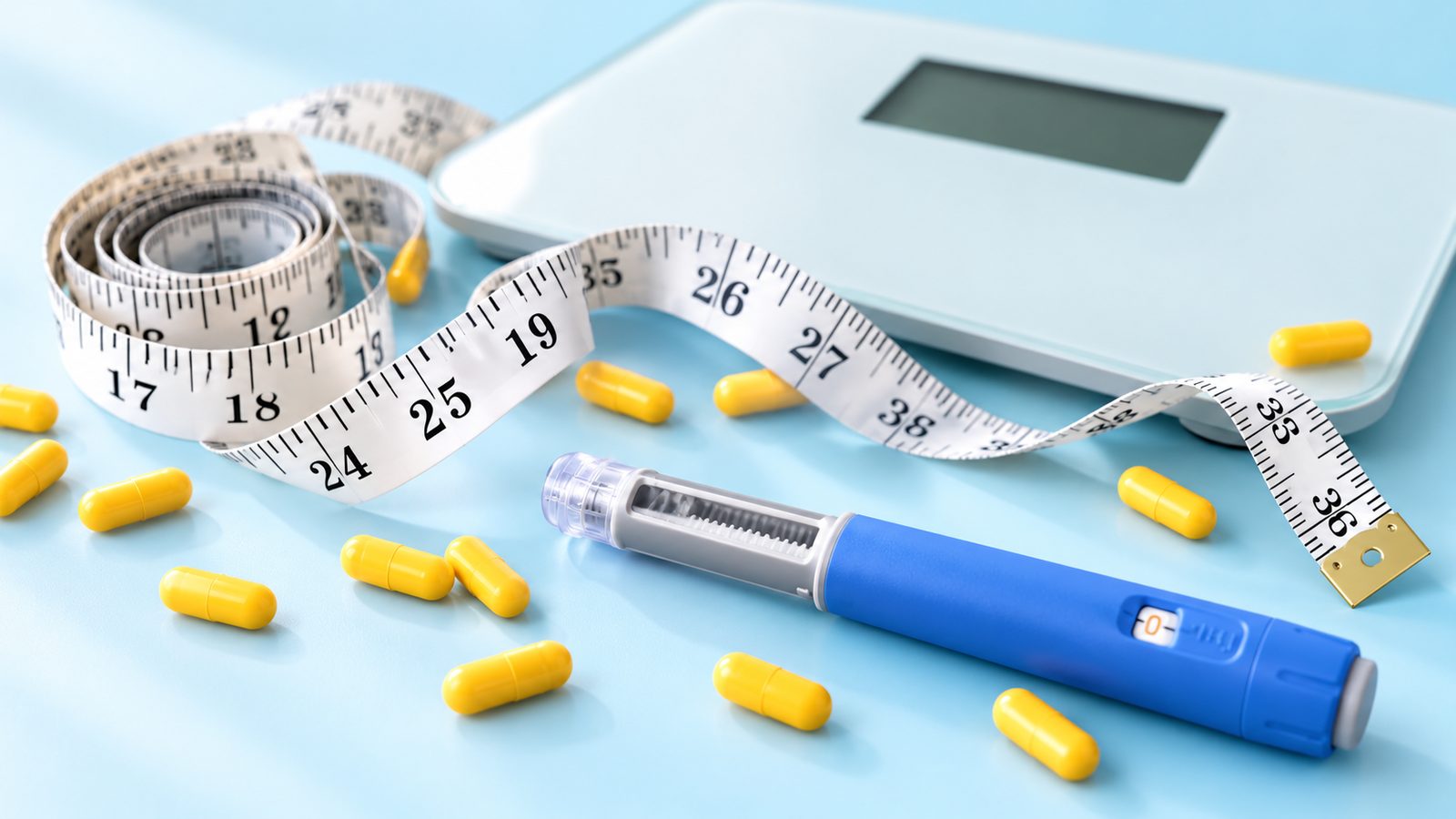
Weight-loss medications such as Ozempic, Wegovy and Mounjaro are changing more than body weight. They are reshaping clothing sizes, consumer shopping behaviour and the way fashion brands and uniform suppliers need to manage garment fit, stock and distribution.
As more people experience significant changes in body shape, traditional clothing size recommendations and historical purchasing patterns are becoming less reliable.
For the apparel industry, this creates a growing challenge: how can businesses provide the right garment size, at the right time, without increasing returns, unnecessary stock and waste?
The Ozempic Effect: Why Clothing Sizes Are Changing
Glucagon-like peptide-1 (GLP-1) treatments have become increasingly prominent in weight management. Ozempic and Wegovy contain semaglutide, while Mounjaro contains tirzepatide and acts on both GIP and GLP-1 receptors.
Although these treatments have different approved uses depending on the country, their impact on body weight is also creating consequences for the apparel industry.
As individuals lose weight, their body proportions and clothing requirements may change considerably. A garment that fitted comfortably a few months ago may become too loose, while finding the correct replacement size can be challenging.
Importantly, weight loss does not necessarily translate into predictable changes in clothing size. Two people losing the same amount of weight may experience different changes in their waist, hips, chest or overall body proportions.
This makes traditional size charts, often based on limited measurements, insufficient for some consumers navigating significant body changes.
How GLP-1 Weight Loss Is Reshaping Fashion Retail
GLP-1-related weight changes are influencing clothing demand, purchasing decisions and consumer expectations. For fashion brands and retailers, this creates several interconnected challenges.
1. Increasing uncertainty about clothing fit
Consumers experiencing changes in body size may no longer know which garment size to order. Some may purchase multiple sizes to try at home, a practice known as bracketing, before returning those that do not fit. This can generate additional fulfilment, processing and reverse-logistics costs.
2. Changing demand across size ranges
Traditional apparel purchasing plans rely heavily on historical sales data to forecast demand by size. However, when customer body-size distributions change, historical size curves may become less accurate. Retailers may experience shortages in some sizes while holding excess stock in others.
This does not mean that brands should abandon inclusive sizing. It means they need more accurate, frequently updated information about their customers’ fit requirements.
3. More frequent garment replacement
As body shapes change over time, customers may need to replace clothing more frequently. This creates commercial opportunities but also raises important questions about affordability, garment lifespan and environmental sustainability.
The challenge is not simply to sell more clothing. It is to help people find garments that fit, while avoiding unnecessary purchasing and returns.
The Hidden Impact on Uniforms, Workwear and PPE
While most discussions about the Ozempic effect focus on fashion retail, the consequences may be particularly significant for organisations managing large uniform programmes.
Unlike ordinary fashion purchases, uniforms and workwear must often meet specific requirements for professional appearance, comfort, functionality and, where applicable, safety.
Consider an organisation supplying uniforms to 20,000 employees across multiple roles and locations. If employees experience significant body-size changes, they may require replacement garments during the normal uniform lifecycle. Without reliable sizing information, this can generate:
- Additional uniform exchanges and replacements.
- Increased stockholding across multiple sizes.
- More complex procurement and distribution.
- Higher logistics, alteration and administration costs.
- Unnecessary production and garment waste.
For personal protective equipment (PPE), correct fit can be especially important. Poorly fitting protective garments may compromise comfort, movement or the intended level of protection, depending on the equipment and applicable safety requirements.
For uniform providers, managing changing body sizes is therefore both a sizing challenge and a supply-chain optimisation opportunity.
Why Traditional Clothing Size Charts Are No Longer Enough
Conventional size charts usually rely on fixed measurements such as chest, waist and hips. However, a clothing size is not the same as a garment fit.
Fit also depends on garment construction, ease allowances, fabric properties, body shape and personal preferences. A person may require different sizes across trousers, shirts, jackets and protective clothing, even when all garments are supplied by the same manufacturer.
For individuals experiencing ongoing changes in body shape, relying on a previously purchased size becomes even less reliable. This is where digital sizing and fit technology can provide a more adaptable approach.
Instead of assuming that a person’s size remains constant, modern sizing systems can generate updated recommendations using current body information and garment-specific data.
How AI-Powered Digital Sizing Can Respond to Changing Body Shapes
AI-powered sizing technology can help businesses respond to changing body measurements without relying exclusively on physical fittings, manual measurements or historical garment sizes.
Bodi.Me’s award-winning Size-Me 5.1 platform is designed to provide personalised garment size and fit recommendations while helping organisations optimise uniform procurement, stock allocation and distribution.
Using a small number of non-intrusive questions, Size-Me applies proprietary algorithms, machine learning and body-data intelligence to recommend suitable garment sizes.
- Adapts to changing body profiles: Wearers can obtain updated size recommendations when their measurements or body shape change.
- Considers individual garment characteristics: Recommendations account for relevant fit and garment information rather than relying solely on generic size labels.
- Reduces unnecessary exchanges: More accurate initial recommendations can help limit ordering errors and avoidable returns.
- Supports supply-chain optimisation: Aggregated sizing intelligence can help organisations plan purchasing, stock quantities and distribution across locations.
- Protects wearer privacy: The platform does not require users to submit photographs or undergo a 3D body scan.
- Improves accessibility: Wearers can access Size-Me 5.1 through a smartphone, QR code, URL or integrated ordering system without downloading an app.
Bodi.Me has delivered more than 1.5 million personalised size recommendations, with reported accuracy of up to 98.7% in qualifying deployments. Actual results depend on garment calibration, the available wearer information and programme conditions.
For organisations managing large workforces, this approach can help reduce uncertainty when employees need replacement garments following changes in body size.
From Better Fit to Smarter Apparel Supply Chains
The growing use of GLP-1 treatments highlights a much broader industry issue: body sizes are not static. People experience changes throughout their lives due to ageing, pregnancy, health, activity levels, weight management and other personal circumstances.
Yet many apparel supply chains still depend on relatively fixed size distributions and purchasing forecasts. The opportunity is to connect accurate sizing information with manufacturing, procurement, inventory management and distribution.
- Manufacture closer to actual demand. Use updated size-distribution intelligence rather than relying entirely on historical ordering patterns.
- Procure the right quantities. Improve purchasing decisions by understanding which sizes are required across different employee populations.
- Optimise stock allocation. Position garments where they are most likely to be needed, reducing stock imbalances.
- Reduce avoidable returns and waste. Improve first-time fit and minimise unnecessary exchanges, transport and surplus garments.
- Support greater inclusivity. Accommodate a diverse workforce whose body measurements and fit requirements may change over time.
The objective is not to predict who will lose weight or which sizes will disappear. It is to build more responsive apparel systems that accommodate every body shape and size.
The Future of Clothing Fit Is Dynamic, Not Static
The Ozempic effect is accelerating an important conversation about the future of garment sizing. For fashion retailers, uniform suppliers and employers, the challenge is no longer simply to offer a wide selection of sizes.
It is to understand changing fit requirements and respond efficiently, without compromising wearer comfort, safety, inclusivity or sustainability. As demand becomes less predictable, the ability to connect accurate fit recommendations with supply-chain data becomes increasingly valuable.
At Bodi.Me, we believe that smarter clothing fit starts with better data and should lead to better purchasing, manufacturing and distribution decisions.
Right size. Right quantity. Right location. First time.
Frequently Asked Questions
Does Ozempic change your clothing size?
Ozempic may be associated with weight loss, which can change body measurements and clothing size. However, the extent of any size change varies between individuals, and weight loss does not necessarily affect every part of the body equally.
How many clothing sizes can you lose on GLP-1 medication?
There is no universal conversion between weight loss and clothing sizes. The number of sizes someone changes depends on factors including starting measurements, body composition, garment sizing standards and the distribution of weight loss.
Why is it difficult to find the right clothing size during weight loss?
Body proportions may change at different rates, while clothing sizes vary between brands and styles. This can make previously purchased sizes less reliable and increase uncertainty when shopping online.
How do GLP-1 medications affect fashion retailers?
GLP-1-related weight changes can influence consumer size demand, purchasing patterns, garment replacements and fit-related returns. Retailers may need more responsive inventory planning and accurate sizing recommendations to adapt.
How can digital sizing technology help people whose body sizes are changing?
Digital sizing technology can generate updated garment recommendations based on current body information and garment-specific fit data, helping consumers and employees select suitable sizes without relying solely on previous purchases.
Can AI-powered sizing reduce clothing returns and overproduction?
AI-powered sizing can help reduce incorrect size selection and provide data to support better inventory planning. Its effectiveness depends on the quality of the underlying body and garment data, system calibration and implementation.
Make Clothing Sizing Smarter with Bodi.Me
Whether your business supplies fashion, workwear or professional uniforms, changing body sizes should not mean more guesswork, unnecessary returns or excess stock.
Discover how Bodi.Me Size-Me 5.1 can help your organisation deliver personalised size recommendations while improving procurement, stock allocation and supply-chain efficiency.
Discover Size-Me at Bodi.Me: https://bodi.me/
Sell More. Waste Less.