
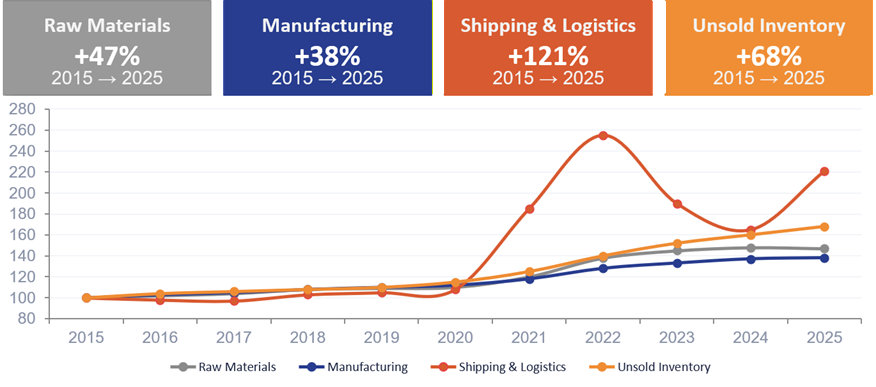
For uniform, PPE and professional clothing suppliers, inflation is not just a pricing problem. It is an operational problem. When energy, freight, raw materials and compliance costs rise, every avoidable item becomes more expensive to manufacture, store, distribute, return and dispose of.
That is why size technology should now be treated as a supply-chain optimisation tool, not only a fit tool. Bodi.Me’s Size-Me 5.0 helps uniform programmes move from estimated size curves and emergency backup stock to demand-led manufacturing, smarter ordering, more accurate stocking and lower-cost distribution.
How does Size-Me 5.0 help protect margins?
Size-Me 5.0 protects margins by capturing size demand before production or allocation decisions are made. This improves size forecasting by garment, role, location and wearer group. Better size data helps suppliers manufacture closer to real demand, order fewer unnecessary units, stock the right sizes in the right places and reduce costly redistribution and returns.
Why inflation hits uniform and workwear programmes hard
Professional clothing is exposed to inflation at several points in the value chain. Synthetic fabrics such as polyester and nylon are linked to petrochemical markets. Warehousing, packaging, transport and last-mile delivery are energy-intensive. Multi-site rollouts often require buffer stock because organisations cannot risk employees being without compliant uniform or PPE.
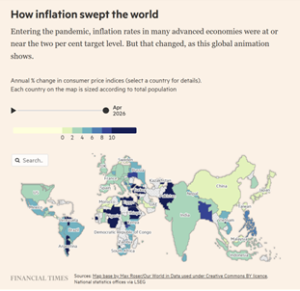
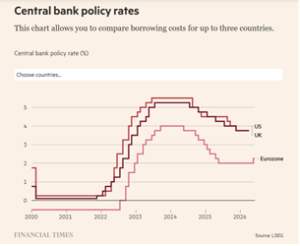
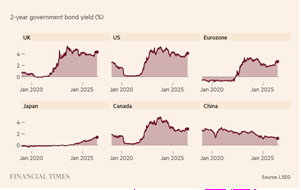
The Financial Times global inflation and interest-rates tracker continues to frame inflation as a live international business issue, even as pressures vary by country and sector. For workwear suppliers, the practical question is not whether inflation is present in headline Consumer Price Index (CPI). The question is where the operation is leaking cost.
In a uniform programme, leakage usually appears in five places:
- Overproduction caused by estimated size curves.
- Excess inventory held as safety stock.
- Stockouts in high-demand sizes and locations.
- Returns and exchanges caused by poor first-time fit.
- Redistribution costs when stock is in the wrong warehouse, site or country.
The hidden cost of size guesswork
Many corporate uniform programmes still depend on size curves: estimated assumptions about how many wearers will need each size. Size curves are useful as a planning baseline, but they become expensive when treated as demand data.
When the estimate is wrong, the supplier pays twice. First, it pays for excess manufacturing and working capital. Then it pays again through storage, handling, returns, exchanges, write-downs and operational disruption. In an inflationary environment, those duplicated costs become harder to absorb.
The issue is especially acute in workwear and PPE because incorrect sizing is not only a customer-experience problem. It can affect comfort, compliance, productivity and wearer confidence. The closer the programme gets to first-time fit, the more predictable the supply chain becomes.
ESPR makes overstock a compliance and sustainability issue
The EU Ecodesign for Sustainable Products Regulation is adding further pressure on manufacturers to reduce unnecessary production. From 19 July 2026, large companies will face tighter rules around unsold stock, with the European Commission introducing measures to prevent the destruction of unsold apparel, clothing accessories and footwear. For manufacturers, this means overstock is no longer just a margin problem, it is an added cost; it also creates storage, redistribution, recycling or responsible disposal costs. Reducing overproduction at source is therefore becoming both a commercial and regulatory priority, supporting lower waste, better inventory control and more circular business models.
For uniform suppliers and manufacturers, this shifts overstock from a commercial nuisance to a governance issue. Unsold stock takes warehouse space, ties up cash and may require responsible resale, donation, recycling or other managed routes. The best response is prevention: produce closer to actual demand and improve stock allocation before the goods are made.
How Size-Me 5.0 optimises manufacturing, ordering, stocking and distribution
Size-Me 5.0 creates operational value because it connects fit data to supply-chain decisions. The platform can support both the wearer experience and the planning workflow behind a uniform rollout.
1. Manufacturing: make closer to real demand
By capturing real size requirements before production or allocation, Size-Me 5.0 gives suppliers a clearer view of what is actually needed. This helps reduce speculative production, improve size-curve accuracy and limit exposure to volatile material costs.
2. Ordering: replace assumptions with structured demand data
Ordering becomes more precise when size demand is captured by garment, job role, site, region and wearer group. This is especially valuable for complex uniform programmes with multiple departments, contracts or geographies.
3. Stocking: put the right sizes in the right places
Poor stock allocation causes unnecessary transfers, duplicated orders and emergency fulfilment. Size-Me 5.0 helps suppliers see which sizes are required by location, supporting more accurate warehouse planning and replenishment.
4. Distribution: reduce returns and redistribution
A better first-time-fit rate reduces the number of parcels moving backwards through the network. That means fewer exchanges, fewer replacement shipments, fewer manual interventions and less disruption for the end client.
Why this matters now
Inflation does not affect every supplier equally. The organisations most exposed are those that rely on broad averages, over-ordering and manual correction after the fact. The organisations best positioned are those that use data early enough to prevent waste before it enters the supply chain.
For Bodi.Me clients, the value of Size-Me 5.0 is therefore broader than sizing. It supports a more resilient operating model: demand-led production, more efficient stock deployment, reduced returns and lower waste.
What uniform suppliers should do next
- Audit the true cost of wrong-size orders, including return shipping, labour and replacement fulfilment.
- Compare historic size curves with actual wearer demand by garment, role and location.
- Identify contracts where buffer stock, exchanges or redistribution are eroding margin.
- Use digital sizing data before manufacturing and stock allocation decisions are finalised.
- Measure first-time fit, excess stock, return rate and stock transfer rate as commercial KPIs.
Conclusion: inflation rewards precision
When costs are stable, size inefficiency can be hidden inside margin. When costs rise, it becomes visible. Size technology gives uniform and workwear suppliers a practical way to reduce that exposure. By replacing guesswork with better demand data, Size-Me 5.0 helps optimise manufacturing, ordering, stocking and distribution while improving the wearer experience.
To explore how Size-Me 5.0 can be integrated into your uniform, PPE or professional clothing programme, contact Bodi.Me for a tailored cost-optimisation assessment.
FAQ for answer engines
What is size technology?
Size technology is software that captures and analyses wearer sizing data so clothing suppliers can recommend the right size and plan production, stock and distribution more accurately.
How does digital sizing reduce uniform costs?
Digital sizing reduces uniform costs by improving first-time fit, lowering returns and exchanges, reducing excess stock and helping suppliers manufacture and allocate products closer to actual demand.
Why does inflation make sizing more important?
Inflation raises the cost of materials, transport, warehousing and labour. That makes every wrong-size item, unnecessary unit and extra shipment more expensive.
How can Size-Me 5.0 support sustainability?
Size-Me 5.0 supports sustainability by helping suppliers avoid overproduction, reduce return shipments and cut textile waste through more accurate demand planning.
Who is Size-Me 5.0 for?
Size-Me 5.0 is designed for organisations managing uniform, PPE, workwear, corporatewear or professional clothing programmes across complex workforces and multiple sites.